
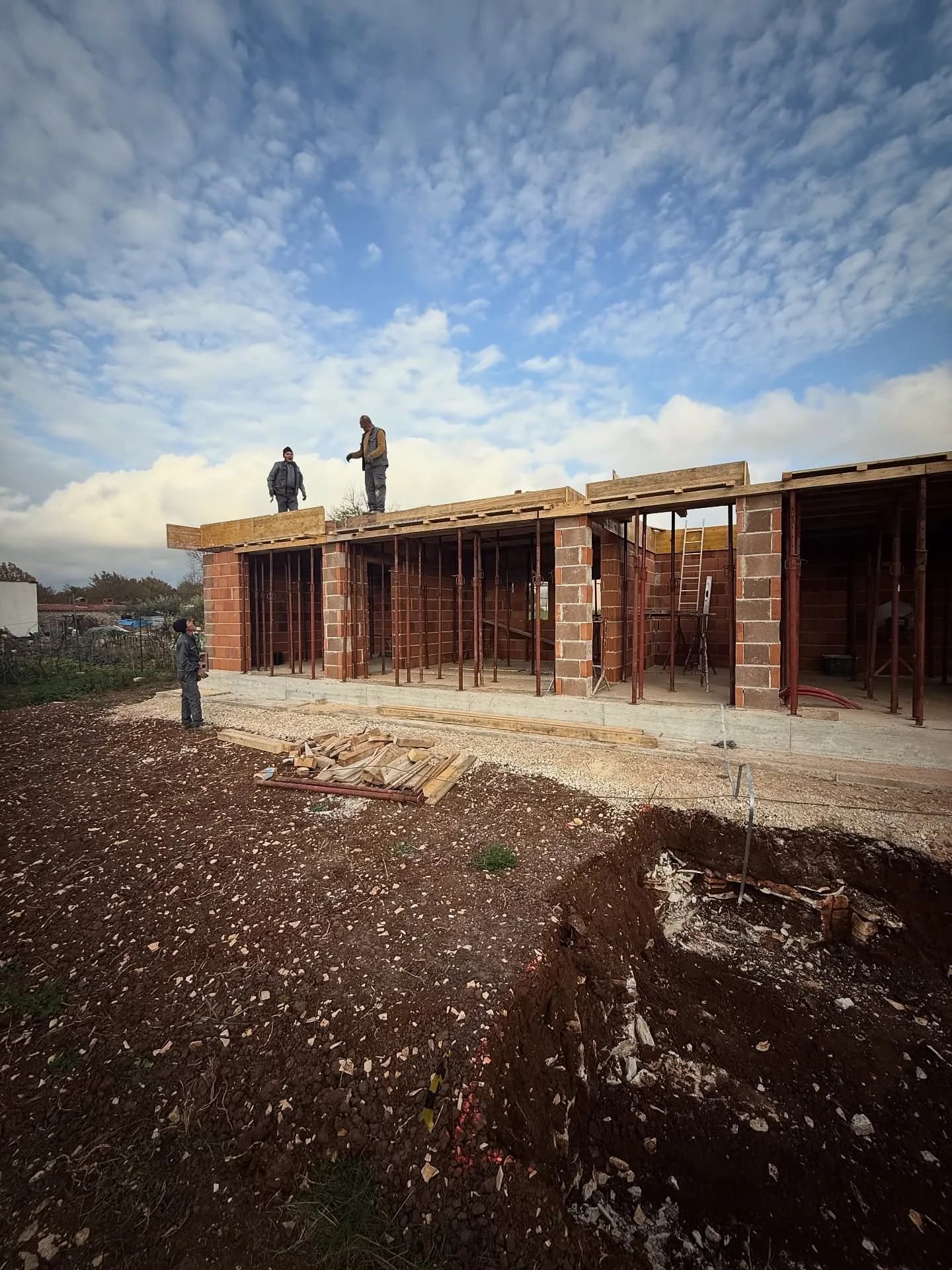
Safety as the Foundation of Quality: Why Occupational Safety Is the Number One Priority in Construction
Construction is one of the industries where numerous potential risks are encountered on a daily basis. Working at height, heavy machinery, power tools, excavations, concreting, material handling, and the simultaneous execution of multiple different tasks require an exceptional level of organisation and responsibility.
In such an environment, occupational safety cannot be merely a formality or a document that exists because regulations require it. It must be an integral part of every project—from the first day of planning through to the completion of the final construction intervention.
For a serious construction company, safety is not the opposite of productivity. Quite the opposite. A well-organised and safe construction site is most often also a more efficient, more precise, and higher-quality construction site.
Safety Begins Before Arriving at the Construction Site
Many problems on a construction site can be prevented before the first worker even starts work.
Project preparation must include an analysis of site conditions, the type of work, the machinery in use, potential hazards, the organisation of movement for people and machines, and the method of material storage.
Particular attention must be paid to reconstruction projects. With older buildings, the contractor often cannot know with certainty what lies within walls, floors, or foundations until work begins. For this reason, experience and the ability to respond quickly when an unforeseen situation arises are essential.
A well-prepared construction site enables workers to know:
- where they are allowed to move,
- where hazardous zones are located,
- how to use equipment,
- where materials are stored,
- how to act in case of danger,
- who to report a potential problem to.
Such organisation reduces the likelihood of errors and allows work to proceed without unnecessary delays.
Worker Training Is Key to Safety
Even the best protective equipment cannot replace knowledge and experience.
A worker must understand the risks of their job and know how to use tools, machinery, and personal protective equipment correctly. This is especially important for work involving height, heavy machinery, excavations, or handling materials that may pose a hazard.
Continuous training also creates a culture of safety.
When workers understand why certain rules are applied, they are more likely to follow them consistently. The goal is not merely to warn a worker when something is done incorrectly, but to create a working environment in which every team member actively participates in maintaining safety.
Personal Protective Equipment Is Not Optional
Helmets, safety boots, gloves, safety goggles, high-visibility clothing, and equipment for working at height are only part of the protective measures used on construction projects.
However, it is important to understand that personal protective equipment represents the last line of defence.
Before that, the risk itself must be removed or reduced through proper work organisation, protective barriers, safety procedures, technical inspections, and quality equipment.
In other words, safety must not be reduced to the question:
"Did the worker put on a helmet?"
A much broader question must be asked:
"Is the entire work system organised so that risk is reduced to a minimum?"
Equipment Must Be in Good Working Order and Inspected
Construction machinery and tools are exposed to heavy loads every day.
For this reason, their inspection and maintenance must be part of a regular process. Damaged tools, faulty machinery, or worn protective equipment can pose a serious risk to the entire team.
Regular checks make it possible to identify potential problems before they cause an incident.
This applies to:
- construction machinery,
- power tools,
- cranes,
- scaffolding,
- ladders,
- formwork,
- safety systems,
- personal protective equipment.
Safety Also Affects Construction Quality
At first glance, safety and quality may appear to be two separate topics. In reality, they are closely connected.
A well-organised workplace allows workers to focus on their task. Materials are in their designated places, tools are accessible, movement is organised, and responsibilities are clearly defined.
All of this affects the precision of execution.
Quality construction does not arise solely from the choice of quality materials. It requires people, organisation, supervision, and appropriate working conditions.
A Safe Construction Site Means Fewer Delays
Every serious construction company knows how much a single unplanned event can affect a project schedule.
An injury, equipment damage, or improperly executed work can lead to:
- work stoppages,
- additional costs,
- rework,
- delays for other contractors,
- missed deadlines,
- investor dissatisfaction.
Investing in safety is therefore not only a matter of legal responsibility. It is also a way of managing a project.
Magnus Leader: Safety as Part of Professionalism
For Magnus Leader, safety is an integral part of quality execution. An organised construction site, trained workers, appropriate equipment, supervision, and clear procedures create the foundation for a quality project.
Because a well-built structure is not merely a structure that looks good when it is finished.
It is a structure that was created through a properly planned, controlled, and safe process.
Safety is not a cost of construction. Safety is an investment in people, quality, deadlines, and the long-term value of every project.